how we work
Our funding priorities
While the list below is not all inclusive, it does provide a framework for the types of projects and recipients we believe can benefit most from our assistance.

Community
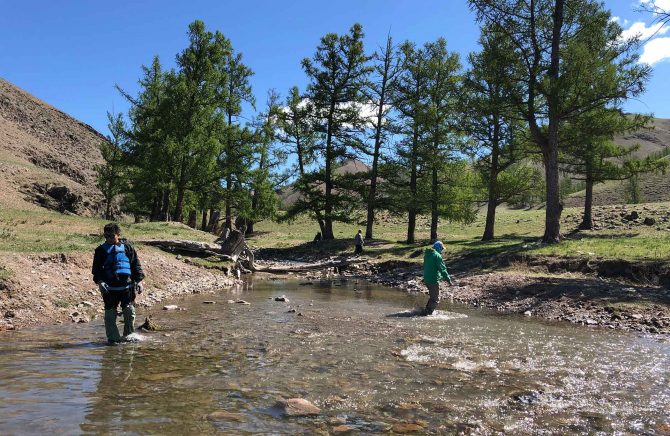
When communities have reliable economic alternatives and ownership over their own resources, conservation follows. The Ambleve Bedrock Foundation funds projects that strengthen local capacity to build and sustain those alternatives, creating conditions where communities can make responsible resource management their own choice rather than an outside requirement. These grants support food security, sustainable livelihoods, and the local economic infrastructure that reduces pressure on overexploited fisheries and ecosystems.
The clearest measure of success is when a community no longer needs us. In West Guadalcanal, Solomon Islands, what began as a modest Foundation grant for tuna bottling training through the Solomon Islands National University has grown into a local center of excellence. Five communities have not only mastered the bottling and food-safety process but are now teaching it to their neighbors, turning a single training program into a self-spreading source of food security and income. In Kiribati, the Foundation co-funded a solar salt enterprise with the national Ministry of Line and Phoenix Islands Development, a shared investment that gives local government a direct stake in the project's success.

People
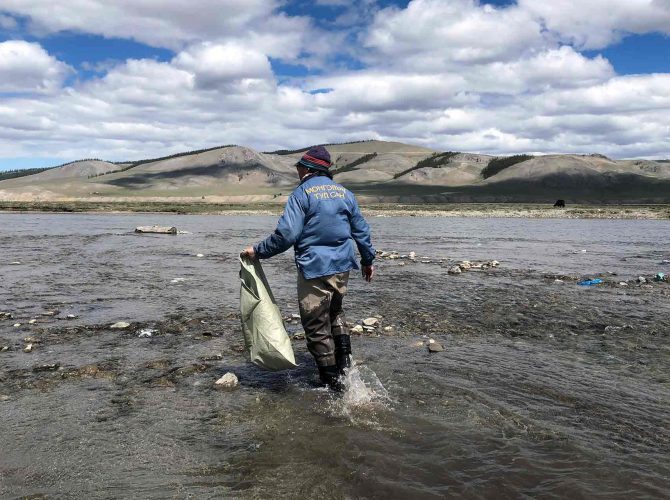
Behind every healthy fishery and thriving fishing destination are the people whose livelihoods depend on it: guides, outfitters, lodge operators, and the staff and families who rely on them. The Foundation funds these people directly, particularly where economic disruption has interrupted or eliminated the visitor income that sustains both their work and the conservation it supports. Recipients can be a single person, a small business, a lodge, or an organized group. By charter, all grants are made outside the United States, with a focus on developing economies where fishing-based tourism is a primary economic driver.
The Foundation's first grant went to Christmas Island Outfitters in Kiribati, sustaining more than ten staff and their families when the island closed to visitors. Later grants followed the same logic in very different places: support for one of Morocco's few licensed fly-fishing guides, who also works to protect isolated native trout in the Atlas Mountains, and a grant to Gibson's Lunchroom on Crooked Island in the Bahamas, a small restaurant and outfitting operation whose owner and six employees connect visiting anglers to local Bahamian guides.

Conservation
Fisheries do not sustain themselves. The Foundation's conservation grants fund the research, monitoring, and management work that keeps fish populations and their habitats viable over the long term, particularly in remote and developing regions where formal conservation infrastructure is thin or absent. Recipients include individual researchers, conservation organizations, government fisheries agencies, and the local communities and guides who are often the most effective stewards of the waters they depend on. This category overlaps with the Foundation's People and Community work by design: durable conservation depends on local investment and ownership, not protection imposed from outside.
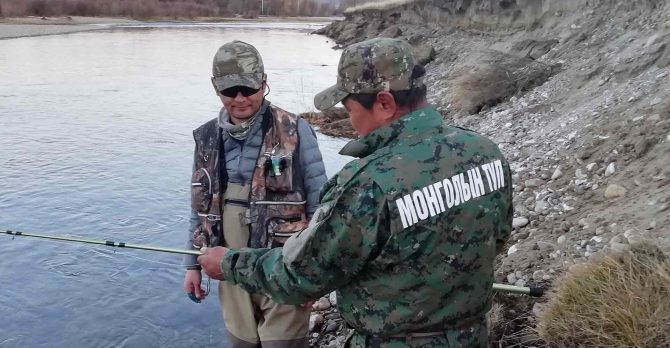
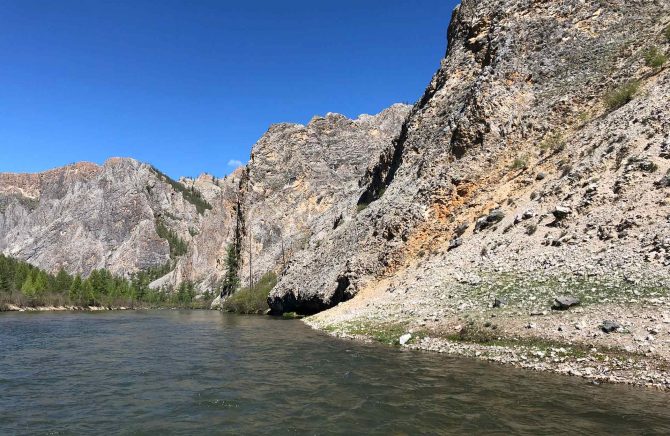
In Mongolia's Eg-Ur watershed, the Foundation supports the Taimen Conservation Fund's riverkeeper program, which pays local wardens to patrol the river and deter poaching of taimen, the world's largest member of the salmon family. That poaching pressure rises whenever tourism income falls, which makes steady funding a conservation tool as much as an economic one.
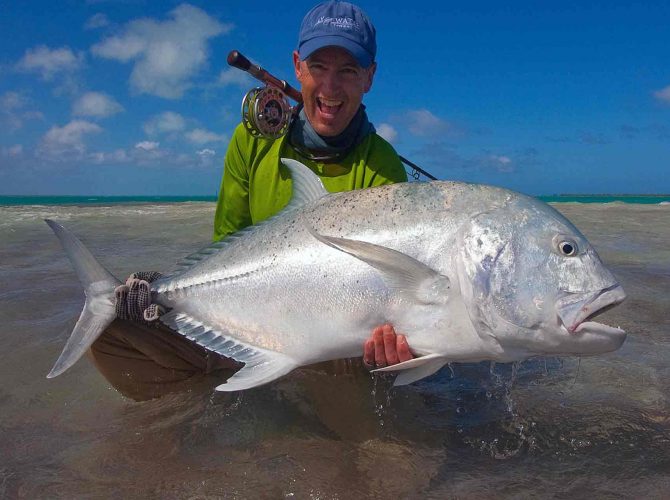
In Kiribati, the Foundation's conservation work runs on two tracks. The first is a science-based effort to develop a management plan for the bonefish, giant trevally, and triggerfish that define one of the world's premier saltwater fisheries, carried out with fisheries researcher Dr. Andy Danylchuk of the University of Massachusetts Amherst, Kiribati's Ministry of Fisheries and Ocean Resources, and the island's guides, communities, and visiting anglers. The second is a multi-year project to build local monitoring capacity, including drone operator training and equipment for surveying Christmas Island's waters, developed with the ministry that administers the island and a regional drone-training team. Together they pair the science to know what protection a fishery needs with the local capability to carry it out.
In the Bolivian Amazon, the same principle takes another form. Working with the angling operator Angling Frontiers, a Foundation grant reaches indigenous Tsimane communities who guide visiting anglers in pursuit of golden dorado and who collectively manage the access fees those anglers pay. Those fees are at once household income and the communities' incentive to protect the river from poaching, pollution, and deforestation. As the most remote settlements on the watershed, they are the effective gatekeepers of the pristine reserves upstream, and the fishery gives them a direct, lasting reason to guard them.
We work with established partners in conservation and recreational fishing related sectors to identify organizations and communities which are under significant economic strain due to global conditions (COVID-19 being the present issue of top importance). Based upon these inputs, we help develop grant scenarios to address specific needs regionally and evaluate those against global need. We then make often difficult decisions on grant provisions, ensuring that the aid we provide gets to those who need it most and has maximum impact.
For any particular grant, some portion of this aid goes to sustain companies and organizations that work in economically devastated areas where 100% of tourist travel has been curtailed for a protracted term and multiple years of revenue have been completely lost. Additional funds support the people in those communities who individually need to provide for their families, but who have seen their income cut to near zero. Still other funds go to find alternatives to poaching and conserve the resources themselves, a significant hurdle in many regions.